Taskmaster
Mar 2026
The problem with JIRA
If your team runs on JIRA, you know the ritual.
Endless backlog grooming. Tickets that drift. Epics nobody fully understands. Product owners spending more time maintaining boards than talking to their teams. And the question nobody can answer with confidence: can we actually build this?
JIRA tells you what work exists. It doesn't know if your team has the skills to do it, whether your tech stack supports it, or how far your goals are from what the product vision actually requires.
That gap is what Taskmaster is built for.
How it works
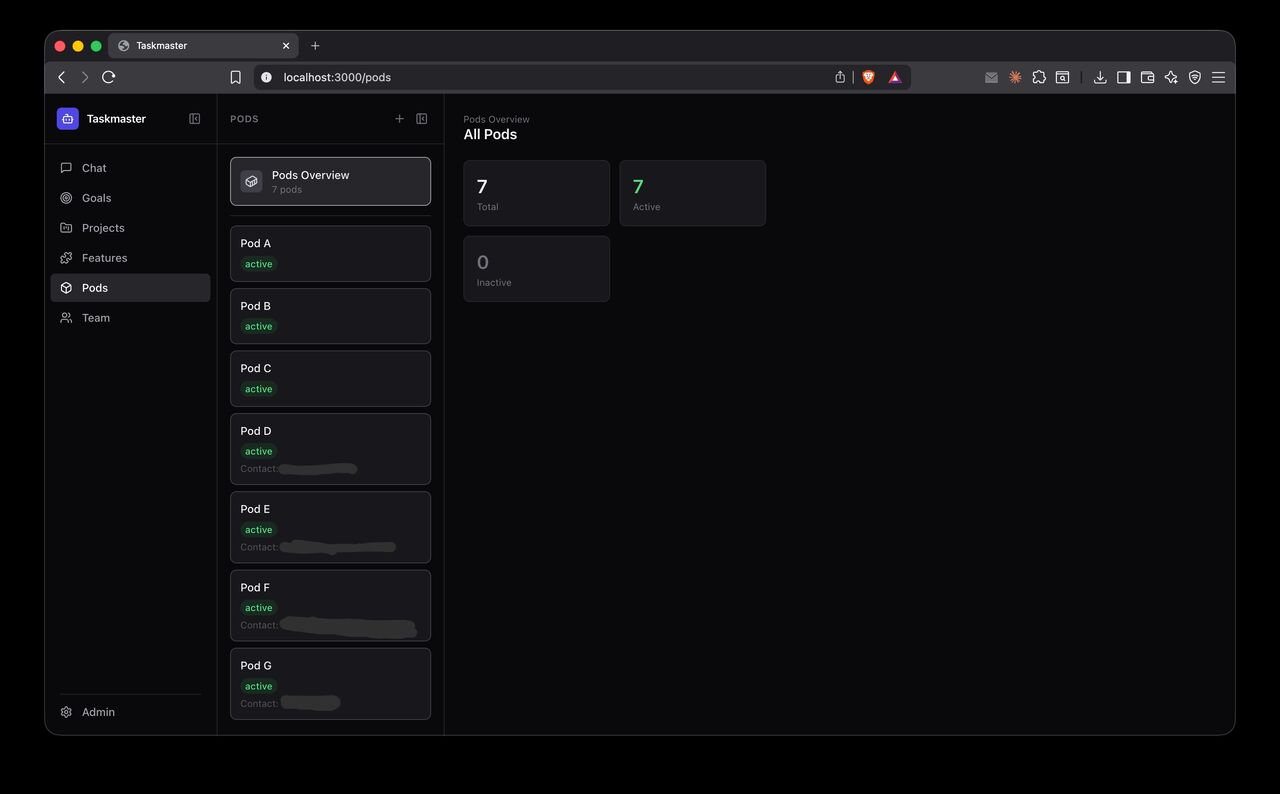
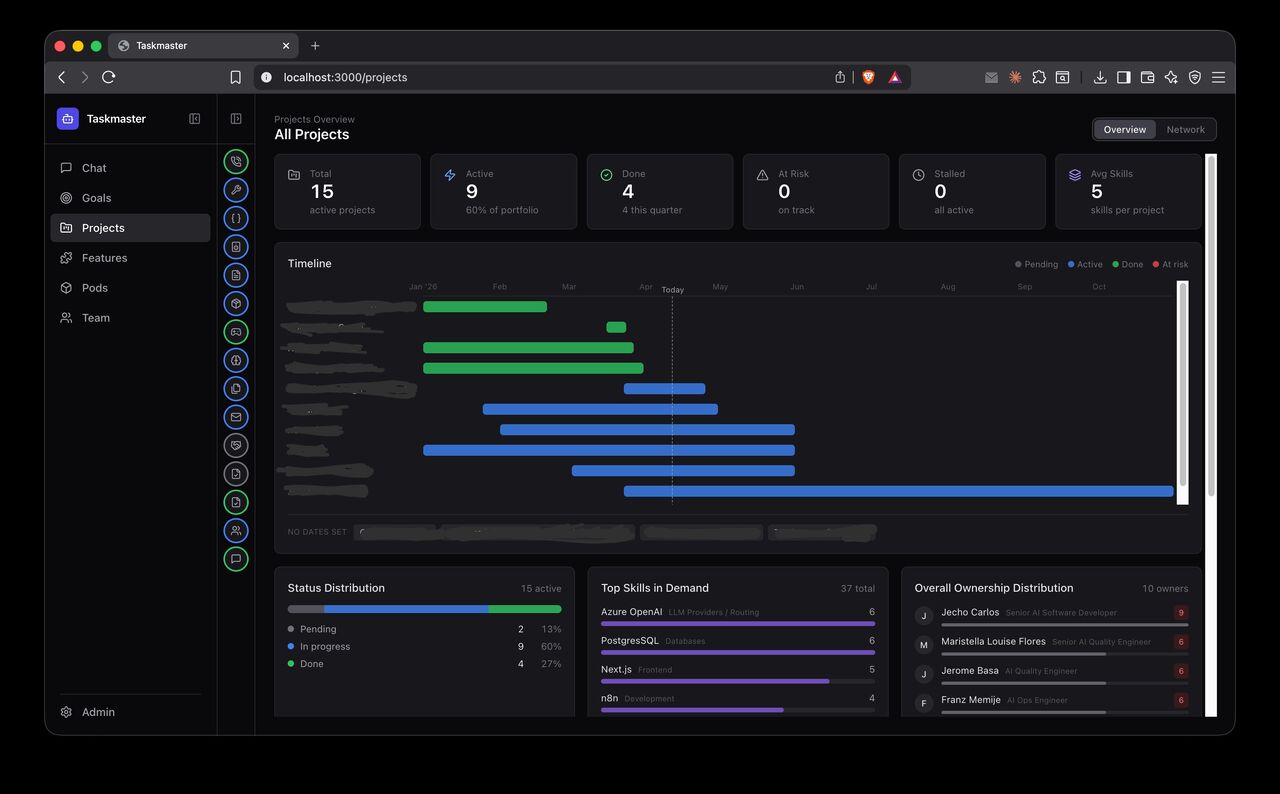
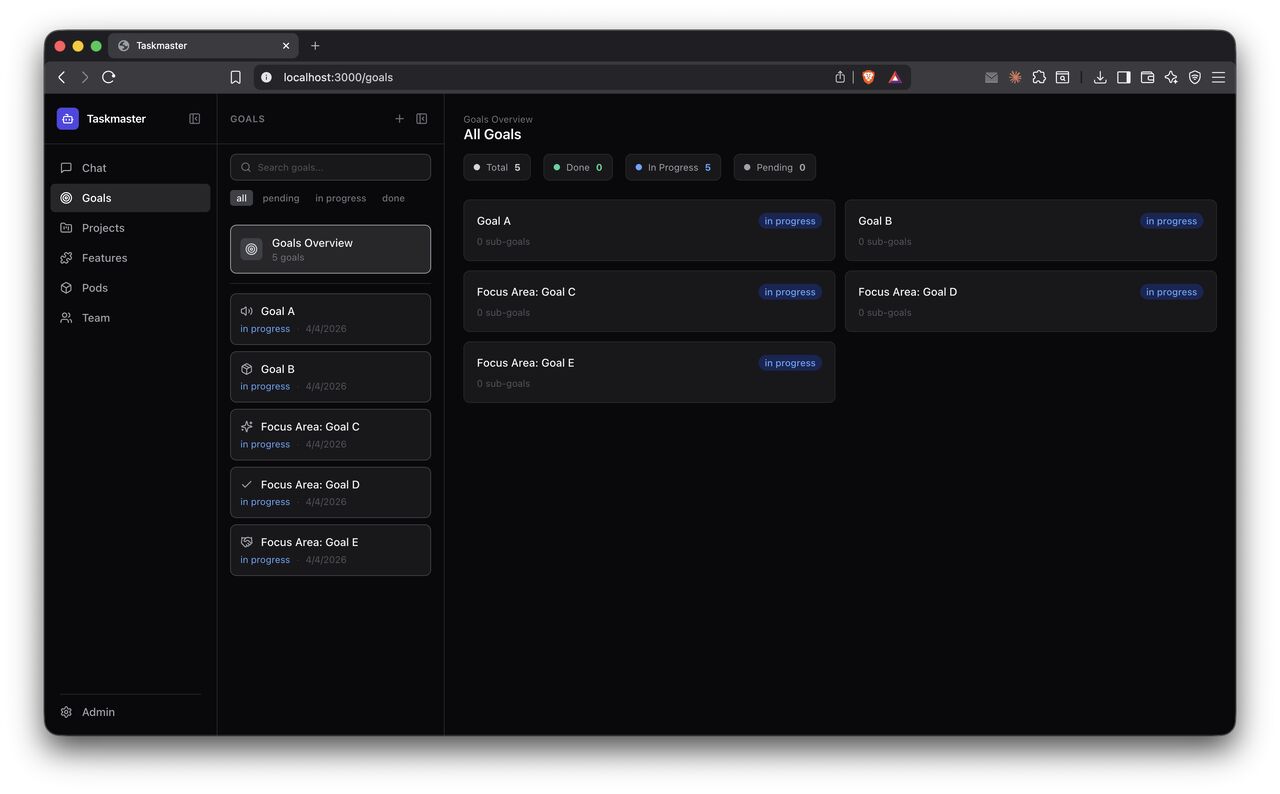
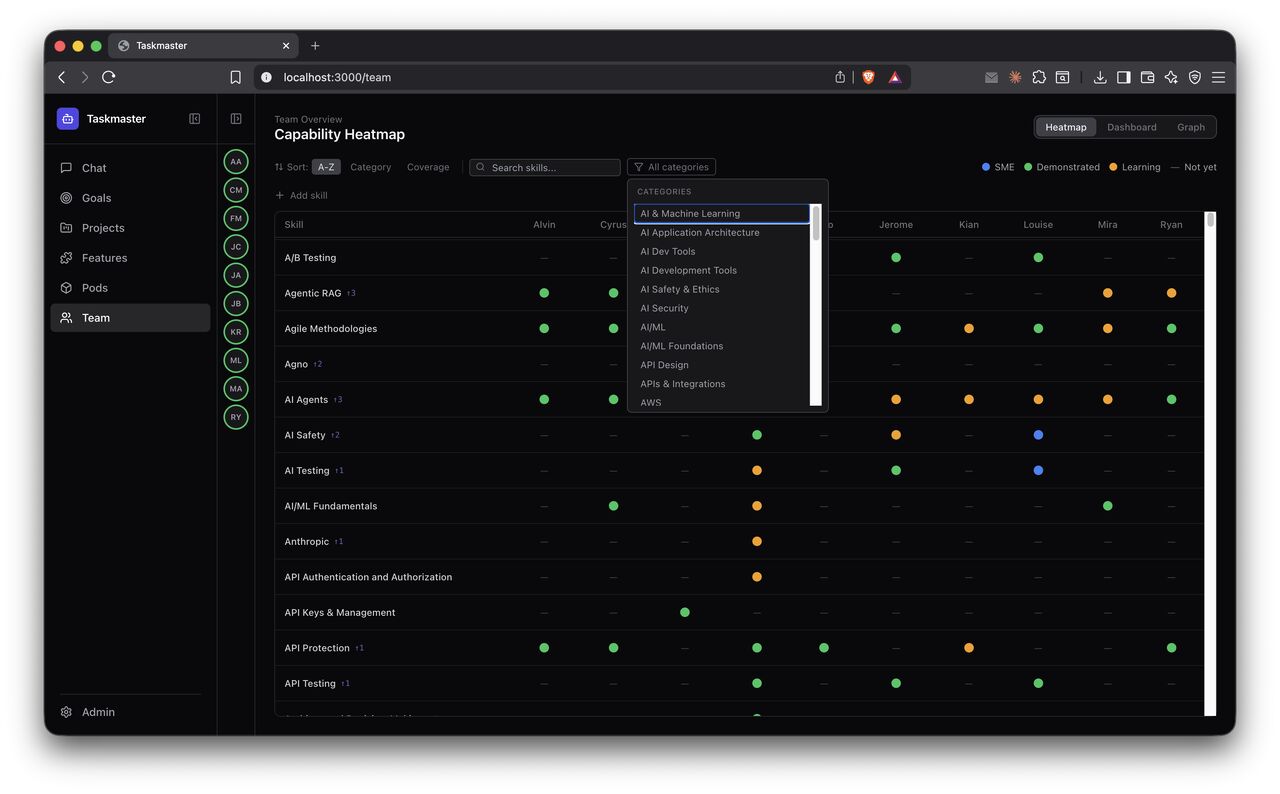
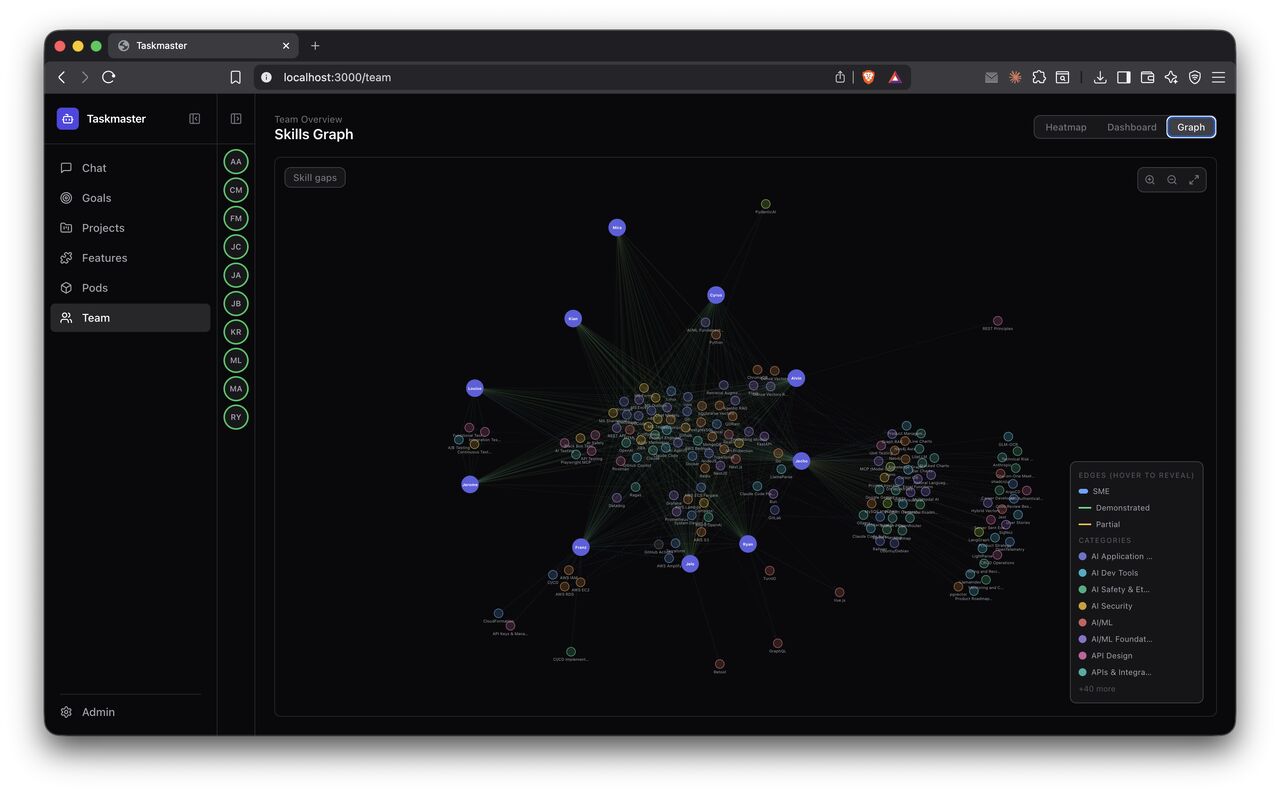
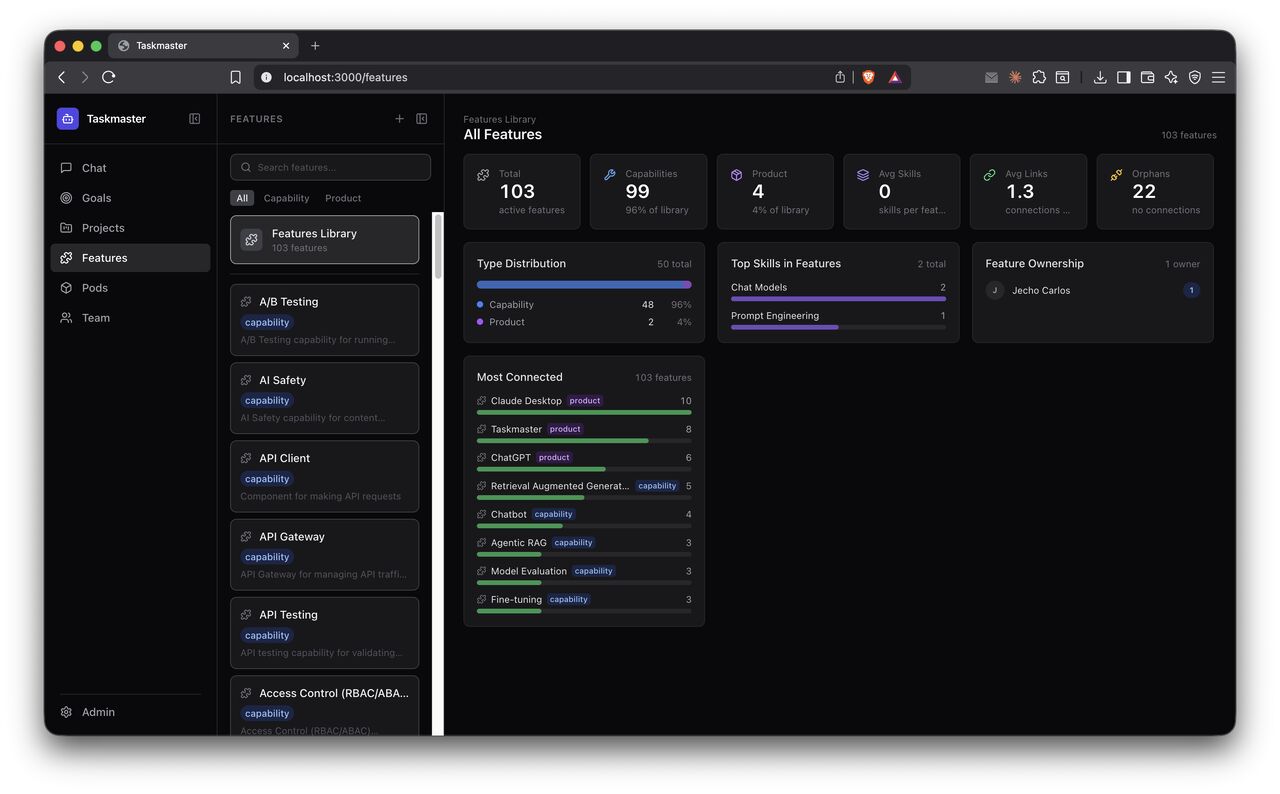
The foundation is a traversable ontology. Skills carry prerequisite chains — the graph knows not just what a team member can do, but what they needed to learn first. Team members are mapped to skills with proficiency grades. Products decompose into capabilities and features. Projects declare the skills they require and the goals they're working toward.
Every relationship lives in a Neo4j knowledge graph — queryable in real time by AI agents that understand the full picture:
- A product owner articulates a vision → the system maps it against what your team can actually deliver
- An engineering lead asks "which goals are blocked by skill gaps?" → gap analysis heatmap, not a meeting request
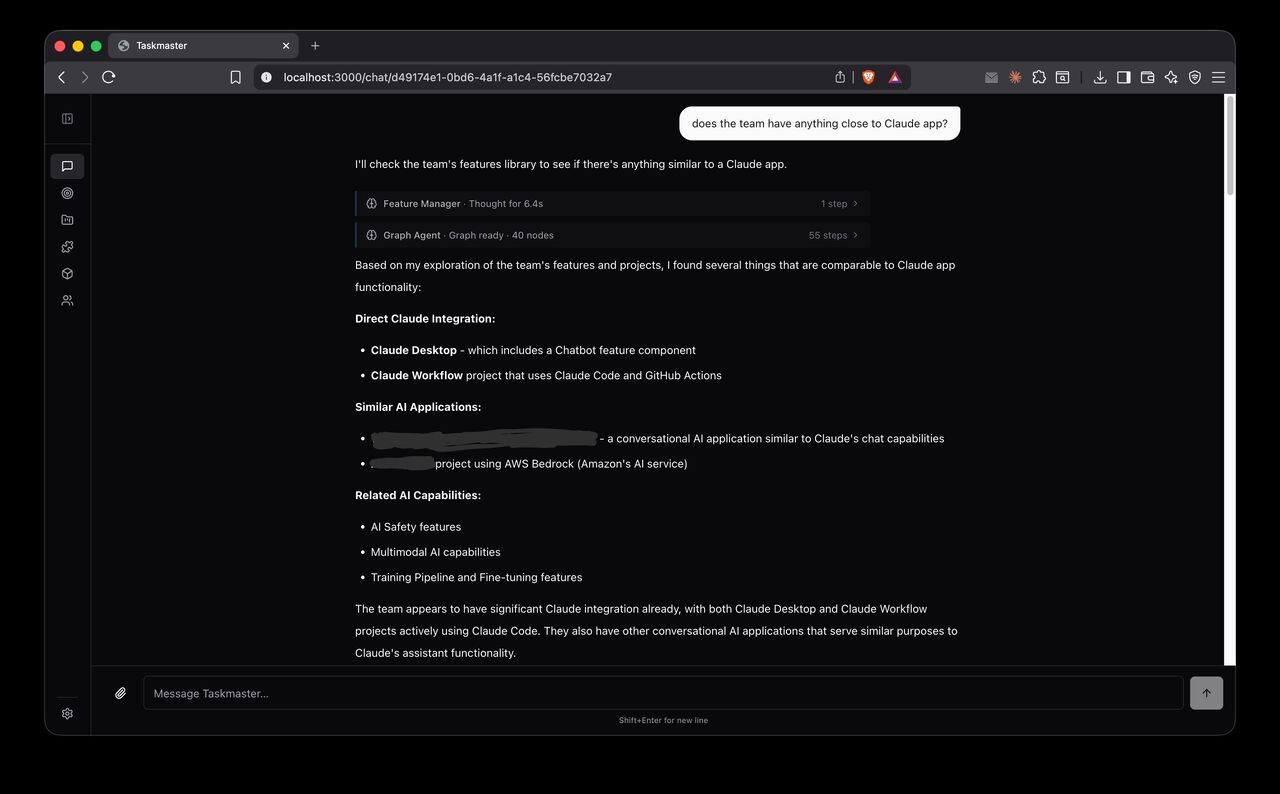
- Anyone asks "can we build this?" → a consultant agent traverses your team's graph to find out
Everything in that graph — skills, team members, projects, goals, features, tech stack — can be managed directly through the UI or simply by talking to the chat agent. However you prefer to work.
When gaps are identified, the system generates upskilling roadmaps grounded in your team's actual context: shaped by the projects you're running, the goals you're chasing, and the skills already in your graph. Never generic. Always grounded with your team.
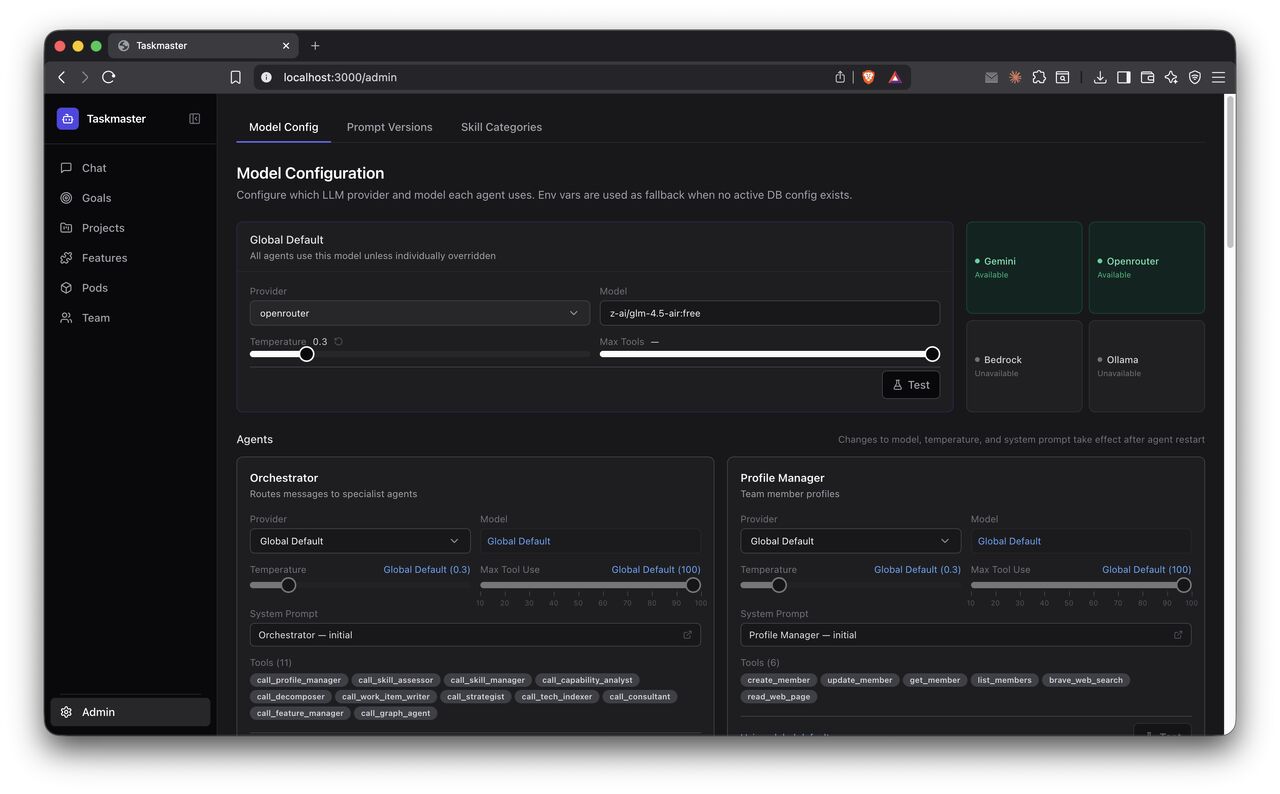
Screenshots
Architecture
Ten specialist AI agents orchestrated via LangGraph. An interconnected triple-store (PostgreSQL + Neo4j + Qdrant) for structured data, graph traversal, and semantic search.
The real shift
When the gap analysis, feasibility checks, and skill mapping are handled by the system — engineering leads and product owners get their time back. Not to do more analysis, but to focus on people.
This isn't a smarter project tracker. It's infrastructure for turning a product vision into an engineering plan scoped to what your team can realistically deliver.
Status
Opening the repository in the coming weeks — Elastic License v2: free to use, free to self-host, built in the open.
github.com/jechocarlos404/taskmaster007
This is a personal project. Screenshots show sample data only and do not reflect any real organisation.